Types of Acne Scars: Ice Pick, Rolling & Boxcar Scars Explained
Acne may clear over time, but the scars it leaves behind can remain long after the breakouts have healed. For many people, these scars become a lasting reminder of past acne, affecting not only the skin’s texture but also self-confidence.
One of the biggest misconceptions is that all acne scars are the same. In reality, different scar types develop differently and respond to different treatment approaches. What works for one type of scar may not be the most suitable option for another.
Understanding your acne scar type is the first step towards choosing the right treatment. At ANLON Skin & Aesthetics, every acne scar consultation begins with understanding your skin—not just your scars. Dr. Nisha R Srinivas carefully evaluates your skin condition, scar type, lifestyle, and treatment goals before discussing suitable treatment options. Rather than following a standard protocol, every recommendation is personalised to your individual skin.
In this guide, we’ll explain the most common types of acne scars, why they develop, how dermatologists identify them, and the treatment options that may be recommended depending on your skin condition.
What Are Acne Scars?
Acne scars are permanent changes in the skin that develop when inflammatory acne damages the deeper layers of the skin during healing.
When acne becomes inflamed particularly cysts and nodules it can destroy collagen, the protein responsible for keeping skin smooth, firm, and supported. As the skin repairs itself, it may produce either too little or too much collagen.
When too little collagen is produced, the skin heals with depressions known as atrophic acne scars. When too much collagen is produced, raised scars such as hypertrophic or keloid scars can develop.
It’s important to remember that not everyone who has acne will develop scars. Factors such as acne severity, genetics, the body’s healing response, and how early acne is treated all influence whether permanent scarring occurs.
What Causes Acne Scars?
Several factors contribute to acne scar formation:
- Severe Inflammatory Acne: Deep inflammatory acne, including cysts and nodules, causes significant damage beneath the skin surface. The greater the inflammation, the higher the chance of collagen damage and permanent scarring.
- Picking or Squeezing Pimples: Popping or picking acne lesions increases inflammation and can damage healthy skin tissue, making scars more likely to develop.
- Delayed Acne Treatment: Leaving inflammatory acne untreated allows ongoing skin damage. Early medical treatment can often reduce the risk of permanent acne scars.
- Genetics: Some individuals naturally heal with more noticeable scars due to inherited differences in collagen production and skin healing.
- Individual Collagen Response: Everyone’s skin heals differently. Two people with similar acne may develop completely different scar patterns because their bodies produce collagen differently during healing.
Why Understanding Your Scar Type Matters
Many people assume that all acne scars are alike, but different scar types respond differently to treatment. A procedure that may improve one type of scar might not be the most appropriate choice for another.
This is why an accurate diagnosis is an important first step. At ANLON Skin & Aesthetics, Dr. Nisha R Srinivas carefully evaluates the type of acne scars, their depth, your skin type, and your treatment goals before discussing suitable treatment options. This personalised assessment helps ensure that recommendations are based on your individual skin rather than a one-size-fits-all approach.
Different Types of Acne Scars
Dermatologists generally classify acne scars into several categories. The three most common depressed acne scars are ice pick scars, rolling scars, and boxcar scars, which are collectively known as atrophic acne scars.
Each has a unique appearance and may require a different treatment strategy.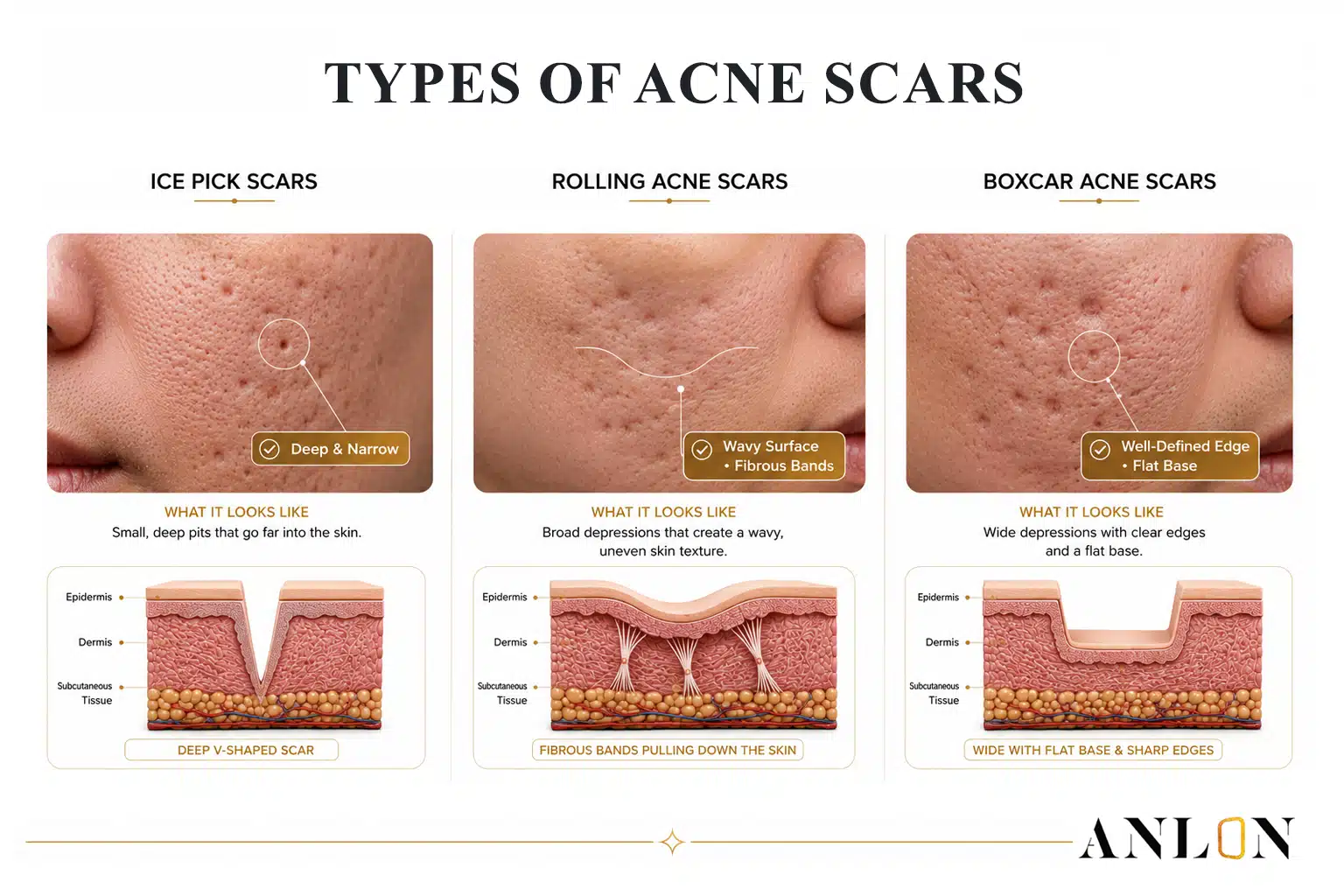
Ice Pick Scars
Ice pick scars are among the deepest and narrowest forms of acne scars. They appear as tiny, deep holes that extend into the skin, giving the appearance that the skin has been pierced by a sharp object.
- Appearance: Deep, narrow pits; usually less than 2 mm wide; V-shaped scars; difficult to conceal with makeup.
- Common Areas: Cheeks, Forehead, Temples.
- What Causes Them: Typically develop after severe inflammatory acne or cystic acne damages collagen deep within the skin.
Treatment Considerations: Because ice pick scars extend deep below the skin surface, treatment usually focuses on stimulating collagen remodelling and improving skin texture over time. Depending on your individual assessment, treatments such as Microneedling or Fractional Laser may be recommended.
Related Treatments: Microneedling
Rolling Scars
Rolling scars create broad depressions with smooth, sloping edges that give the skin an uneven or wavy appearance. They are often more noticeable in natural lighting.
- Appearance: Wide depressions; soft edges; wavy skin texture; uneven appearance.
- What Causes Them: Develop when fibrous bands beneath the skin pull the surface downward, creating shallow depressions.
Treatment Considerations: Treatment often aims to release these fibrous bands while encouraging healthy collagen production. This may include Microneedling, Subcision, PRP Therapy, or combination procedures.
Related Treatments: Microneedling | PRP Therapy
Boxcar Scars
Boxcar scars are wider than ice pick scars and have sharply defined edges. They resemble shallow or deep craters with flat bases.
- Appearance: Broad depressions; well-defined borders; round or rectangular shape; can be shallow or deep.
- What Causes Them: Form when inflammatory acne destroys collagen over a broader area of skin.
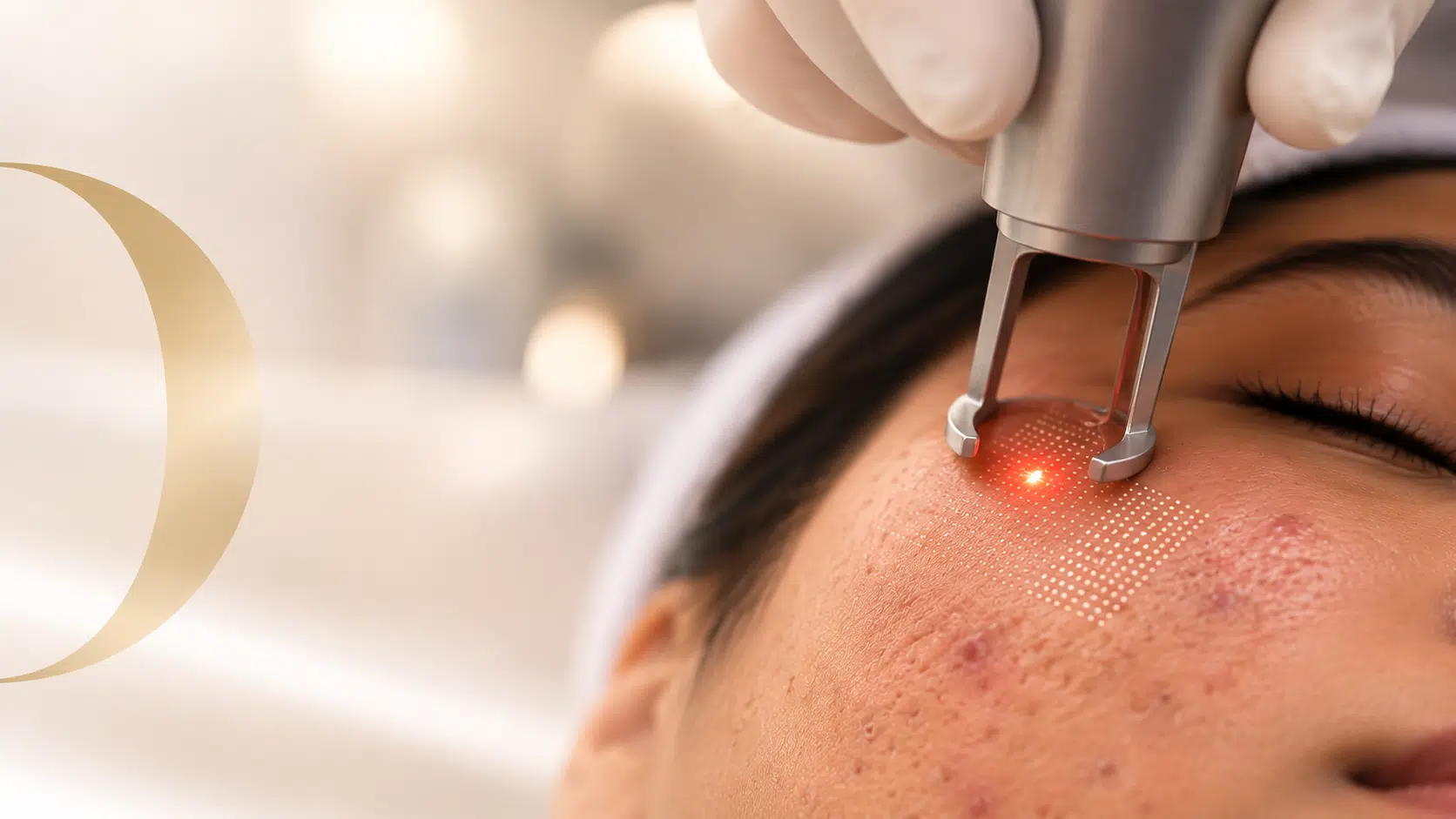
Treatment Considerations: Several dermatological procedures may help improve the appearance of boxcar scars by promoting collagen remodelling and improving skin texture. This may include Microneedling, Chemical Peels, Fractional Laser, or combination treatments.
Related Treatments: Microneedling | Chemical Peel
Hypertrophic & Keloid Scars
Unlike atrophic acne scars, hypertrophic and keloid scars are raised because the skin produces excessive collagen during healing.
- Hypertrophic Scars: Raised above the skin surface; stay within the original acne lesion; may gradually flatten over time.
- Keloid Scars: Extend beyond the original acne lesion; continue growing after healing; more common in genetically predisposed individuals.
Because these scars develop differently, they require a different treatment approach from depressed acne scars. A dermatologist can determine the most appropriate management after assessing your skin.
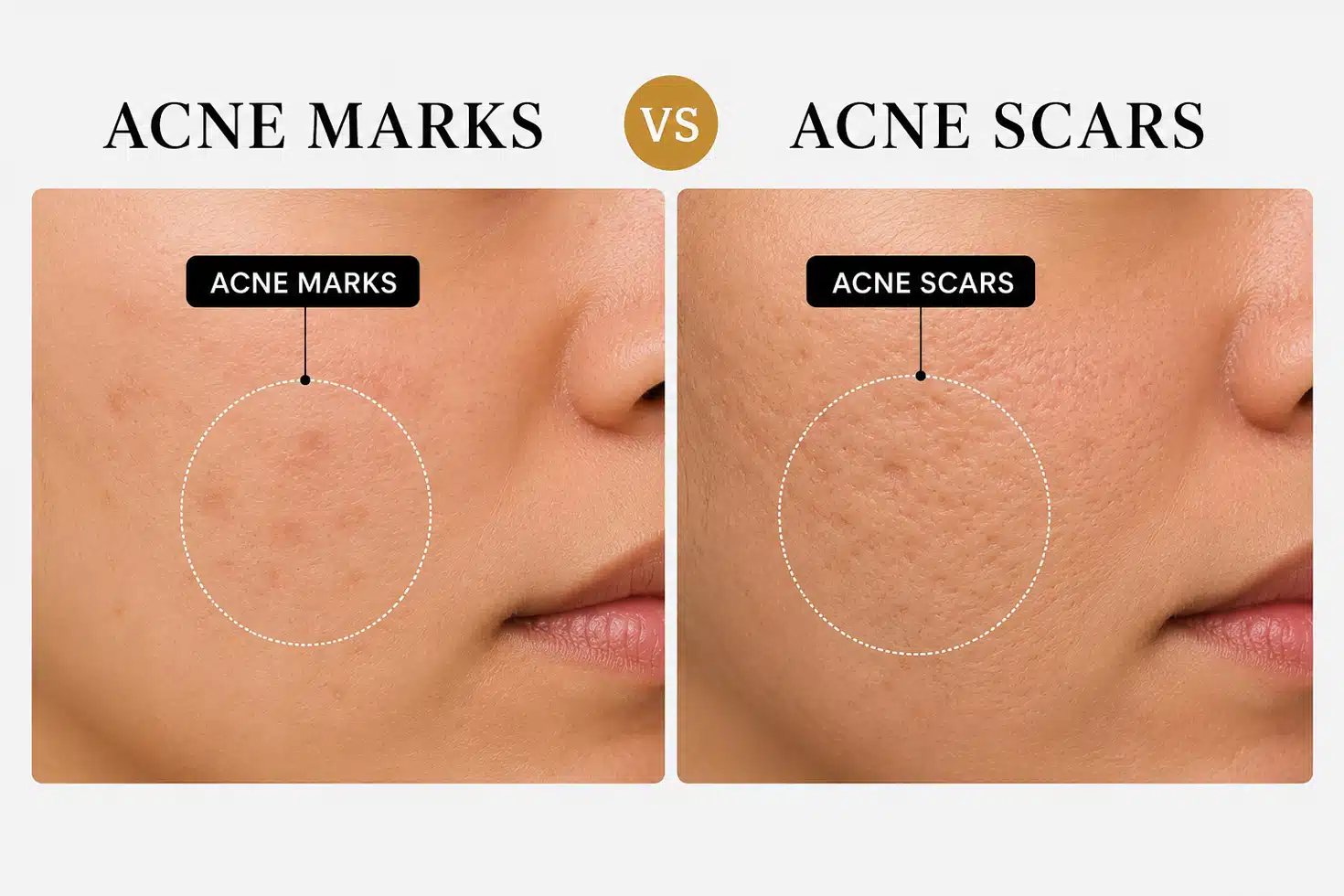
Acne Marks vs Acne Scars
Many people confuse acne marks with acne scars, but they are different conditions.
| Acne Marks | Acne Scars |
|---|---|
| Temporary skin discoloration | Permanent change in skin texture |
| Usually fade gradually | Often require professional treatment |
| Caused by pigmentation | Caused by collagen damage |
How ANLON Approaches Acne Scar Treatment
Understanding your acne scar type is only the first step. At ANLON Skin & Aesthetics, every treatment recommendation begins with understanding your skin not just your scars.
Your assessment includes:
- The type of acne scars present
- Scar depth and severity
- Skin type and sensitivity
- Active acne, if present
- Previous treatments
- Lifestyle and treatment goals
Based on this evaluation, a personalised treatment plan may include Microneedling, Chemical Peels, Fractional Laser, PRP Therapy, or a combination of procedures designed to improve skin texture gradually. Our goal is not simply to treat acne scars, but to recommend the most appropriate treatment for your skin using a personalised, dermatologist-led approach.
What Results Can You Realistically Expect?
Acne scar treatments are designed to improve the appearance of scars and skin texture, rather than completely erase them. The degree of improvement varies depending on:
- The type of acne scar
- How severe the scars are
- Your skin’s healing response
- The treatment recommended
- Whether combination procedures are used
Many patients notice gradual improvement over multiple treatment sessions, as collagen remodelling takes time. Having realistic expectations and following your dermatologist’s treatment plan are important parts of achieving the best possible outcome.
When Should You See a Dermatologist?
If you’ve noticed lasting changes in your skin texture after acne has healed, or if your scars affect your confidence, it may be time to consult a dermatologist. An accurate diagnosis helps determine the type of acne scar and the treatment options that may be appropriate for your skin.
At ANLON Skin & Aesthetics, Dr. Nisha R Srinivas provides personalised acne scar assessments based on your skin condition, scar type, and treatment goals. If you’re unsure which type of acne scar you have, a consultation can help you better understand your skin and discuss suitable treatment options.
👉 Explore our Acne Scar Treatment page to learn more.
Frequently Asked Questions for Types of Acne Scars
- What are the different types of acne scars?
The most common types are ice pick scars, rolling scars, boxcar scars, hypertrophic scars, and keloid scars. Each type has a different appearance and may require a different treatment approach. - Which acne scar is the most difficult to treat?
Ice pick scars are often considered among the most challenging because they extend deep into the skin. However, the most suitable treatment depends on the scar type, skin condition, and a dermatologist’s assessment. - Can ice pick scars be removed?
Ice pick scars can often be improved with dermatologist-recommended procedures that stimulate collagen production or resurface the skin. The extent of improvement varies between individuals. - Are rolling scars permanent?
Rolling scars are permanent changes in skin texture. Professional dermatological treatments may improve their appearance depending on the severity and individual skin characteristics. - Which treatment works best for boxcar scars?
There is no universal treatment for boxcar scars. A dermatologist may recommend Microneedling, Chemical Peels, Fractional Laser, or combination treatments after assessing your skin. - Do all acne scars need treatment?
No. Treatment is a personal choice. Some people seek treatment for cosmetic reasons, while others choose not to. A dermatologist can explain the available options based on your concerns. - Can acne scars disappear naturally?
Unlike acne marks, true acne scars usually do not disappear on their own because they involve permanent collagen changes. Some scars may become less noticeable over time, but many require professional treatment to improve their appearance. - How can a dermatologist identify acne scar types?
A dermatologist examines the depth, shape, location, and texture of your scars, along with your skin type and acne history. This assessment helps determine the most appropriate treatment plan.
Dr. Nisha R Srinivas
MBBS, MD – Dermatology, Venereology & Leprosy
Founder & Consultant Dermatologist
ANLON Skin & Aesthetics