Acne Marks vs Acne Scars: What’s the Difference?
When a pimple disappears, the skin may not immediately return to its previous appearance. You may notice a red spot, brown patch, or an area of uneven texture where the acne used to be.
This often leads to a common question:
“Is this a pimple mark or an acne scar?”
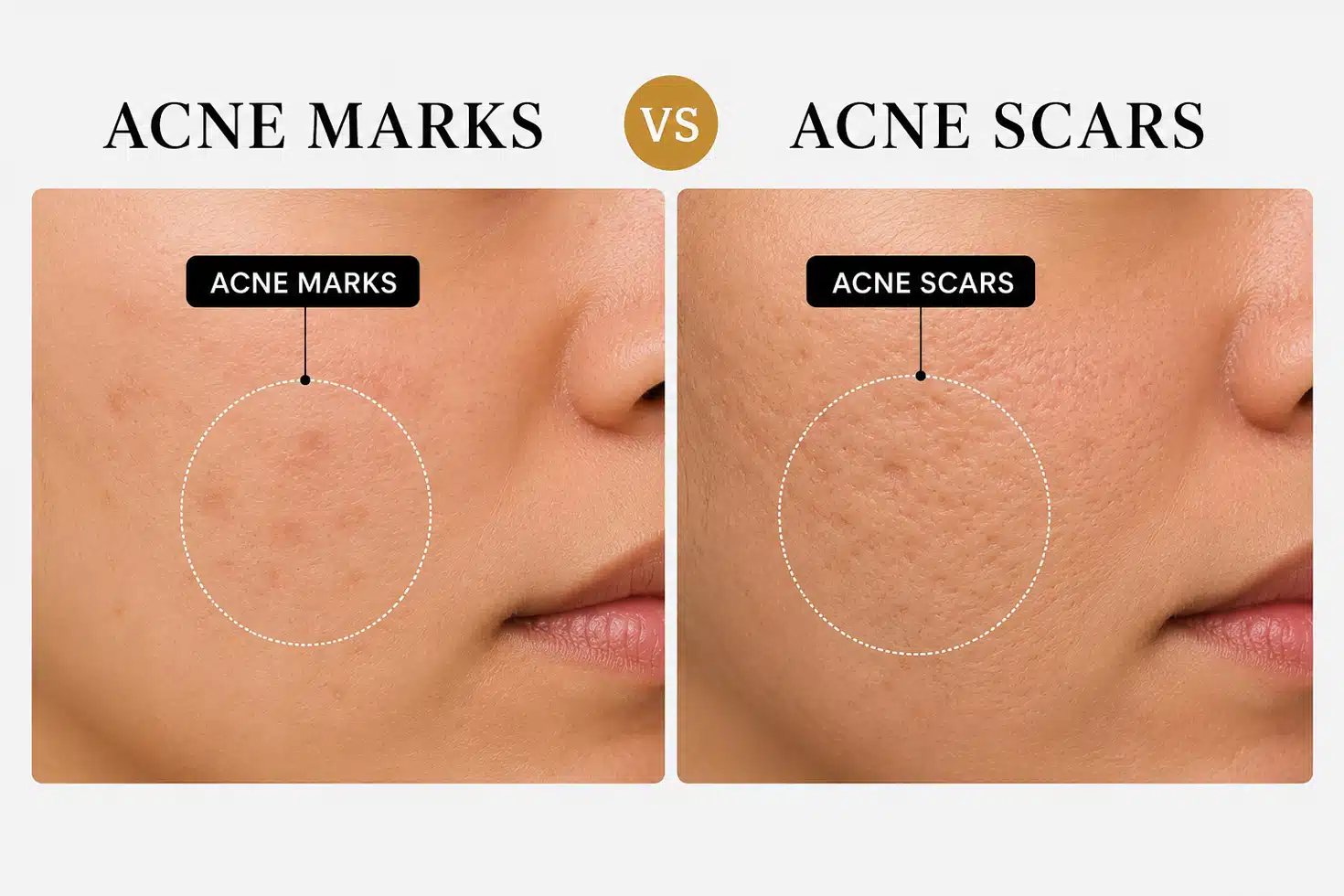
Although the terms are often used interchangeably, acne marks and acne scars are not the same. Marks usually refer to changes in skin colour that can gradually fade, while true acne scars involve changes to the skin’s texture caused by damage to collagen during the healing process.
Understanding the difference is important because the appropriate approach depends on what is actually happening in your skin.
At ANLON Skin & Aesthetics, every consultation begins with understanding your skin not just the marks or scars you can see. Dr. Nisha R Srinivas assesses the type of concern, your skin condition, and your treatment goals before discussing suitable options.
What Is the Difference Between Acne Marks and Acne Scars?
The simplest way to understand the difference is:
- Acne marks change the colour of your skin.
- Acne scars change the texture or structure of your skin.
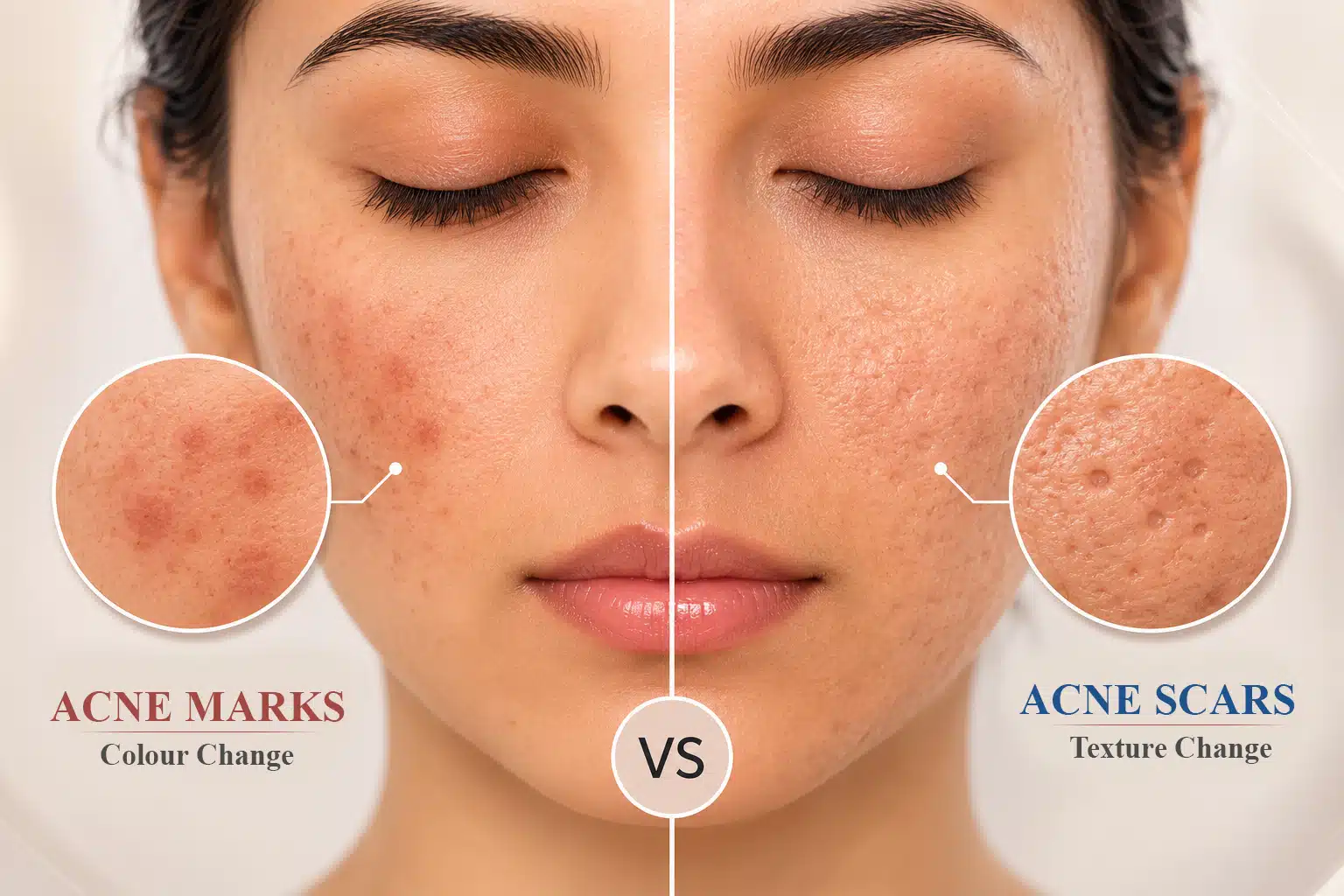
However, there are different types of marks and scars, so the distinction isn’t always obvious by simply looking in the mirror.
Acne Marks
Acne marks are usually changes in skin colour that remain after an acne lesion has healed. They do not create a depression, raised area, or permanent change in the skin’s structure.
Two common forms are post-inflammatory erythema (PIE) and post-inflammatory hyperpigmentation (PIH).
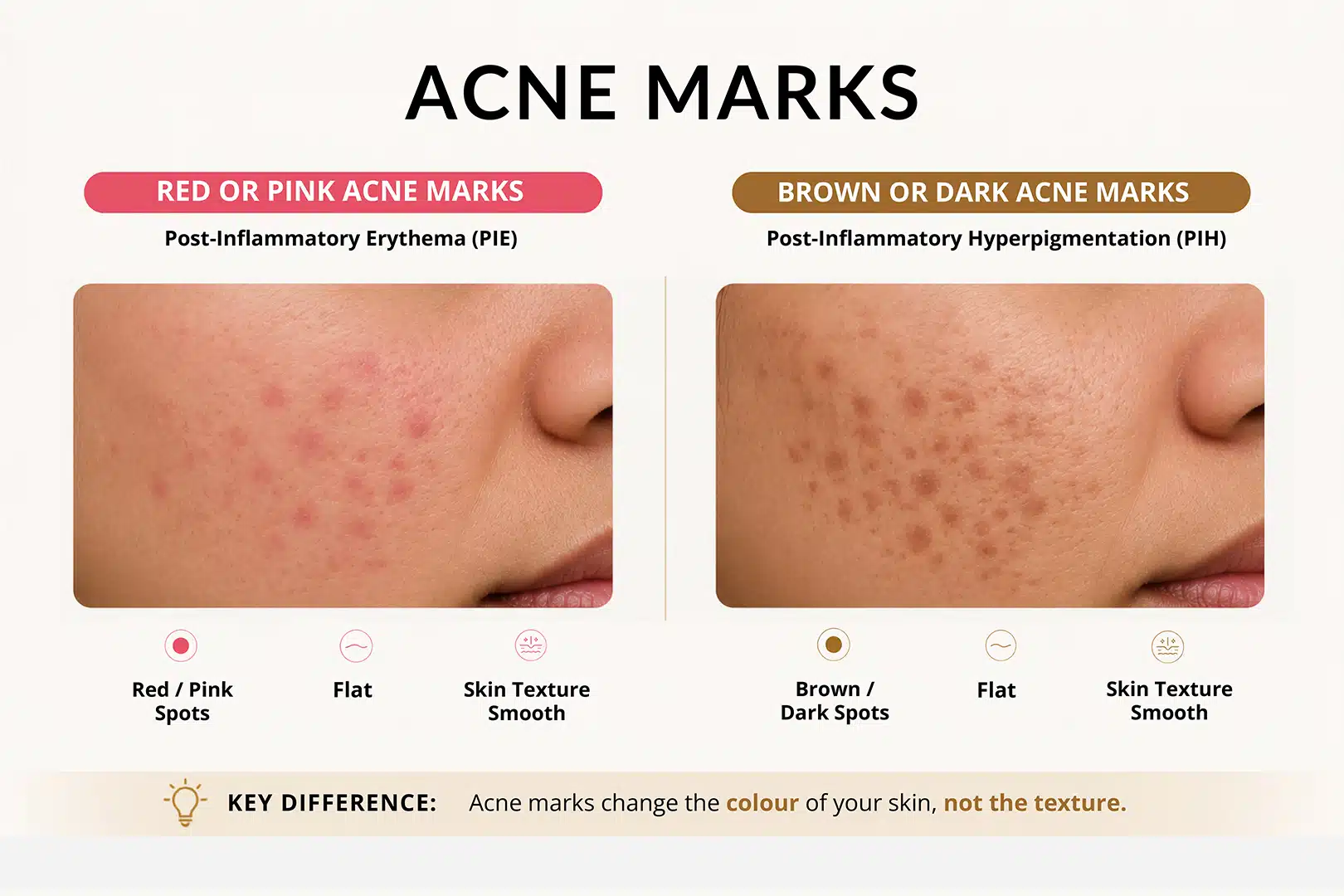
Red or Pink Acne Marks
After inflammation has settled, some people develop red, pink, or purple-looking areas where a pimple was previously present. These colour changes are often associated with post-inflammatory erythema (PIE). They may become more noticeable after exposure to heat, exercise, or changes in temperature.
Brown or Dark Acne Marks
Brown, grey, or darker spots can develop after inflammatory acne, particularly in skin types that are more prone to pigmentation. These are generally associated with post-inflammatory hyperpigmentation (PIH). Unlike a true acne scar, the skin surface remains relatively smooth.
How to Identify an Acne Mark
Ask yourself:
- Is the skin surface still smooth?
- Is the main change colour rather than texture?
- Does the area look red, pink, brown, or darker than the surrounding skin?
- Is there no obvious depression or raised tissue?
If yes, you’re more likely looking at an acne mark rather than a scar.
What Are Acne Scars?
True acne scars occur when inflammation from acne damages the deeper layers of the skin and affects collagen during the healing process. Unlike marks, acne scars involve a change in skin texture or structure. They can appear as depressions or raised areas.
The most common depressed acne scar types include:
- Ice pick scars
- Rolling acne scars
- Boxcar acne scars
These are known as atrophic acne scars. Raised acne scars, including hypertrophic scars and keloids, can also occur in some people.
How Can You Tell If You Have an Acne Scar?
Look at your skin under natural light and gently observe its texture. You may have a true acne scar if you notice:
- A visible depression
- A narrow, deep pit
- A broad, shallow indentation
- Uneven or wavy skin texture
- A raised area of skin
- A change that remains even when the surrounding redness or pigmentation fades
A dermatologist can assess the depth and structure of the scar more accurately.
Acne Marks vs Acne Scars: Quick Comparison
| Feature | Acne Marks | Acne Scars |
|---|---|---|
| Main change | Skin colour | Skin texture or structure |
| Appearance | Red, pink, brown or dark spots | Pits, depressions or raised areas |
| Collagen damage | Usually not the main issue | Often involved |
| Can fade naturally? | Often gradually | Usually persistent |
| Texture affected? | Usually no | Yes |
| Professional treatment | Sometimes helpful | Often considered |
| Common terms | Pimple marks, dark spots | Pimple scars, acne scars |
Why Do Acne Marks and Scars Form?
Both can occur after acne, but the underlying process is different.
Acne Marks
Marks develop when inflammation triggers changes in the skin’s blood vessels or pigment-producing cells. The resulting colour change can remain after the original pimple has healed.
Acne Scars
Scars develop when deeper inflammation damages skin tissue and collagen. If the skin produces too little collagen during healing, depressed scars may develop. If it produces excessive collagen, raised scars can form. This is one reason severe inflammatory acne has a greater risk of permanent scarring.
Can Acne Marks Go Away on Their Own?
Many acne marks gradually become less noticeable as the skin naturally renews itself. However, how quickly they fade can vary considerably depending on:
- Skin type
- Degree of inflammation
- Sun exposure
- Whether new acne continues to develop
- Individual healing response
- Pigmentation tendency
Daily sun protection is particularly important because UV exposure can make pigmentation more noticeable and prolong its appearance. If marks persist or are a significant concern, a dermatologist can assess the pigmentation and discuss appropriate treatment options.
Can Acne Scars Go Away Naturally?
True acne scars are different. Because they involve structural changes in the skin, they generally do not disappear completely on their own.
Some scars may become less noticeable over time, but deeper scars often remain unless treated. The treatment approach depends heavily on the type, depth, and severity of the scar. For example, ice pick, rolling, and boxcar scars may require different approaches.
What About “Pimple Marks” and “Pimple Scars”?
This is where things can become confusing. People commonly use:
- Pimple marks → to describe red or dark spots after acne.
- Pimple scars → to describe pits, depressions, or other permanent texture changes.
However, these terms are not always used consistently. For example, someone may say: “I have pimple marks.” But they may actually have rolling or boxcar scars.
That’s why a dermatologist assessment can be useful when you’re unsure whether you’re dealing with pigmentation or structural scarring.
Why Understanding the Difference Matters
Choosing treatment based only on what a concern is called can lead to confusion. A product or procedure designed for pigmentation isn’t necessarily going to correct a deep acne scar. Similarly, treatments designed to improve depressed scars may not be necessary for a simple post-acne mark.
At ANLON Skin & Aesthetics, Dr. Nisha R Srinivas assesses whether the concern is pigmentation, erythema, textural scarring, or a combination of these before discussing treatment. This helps ensure that treatment recommendations are based on the actual skin concern rather than a generic “pimple mark removal” approach.
How ANLON Approaches Acne Marks & Acne Scars
Understanding whether you’re dealing with a mark or a scar is only the first step. At ANLON Skin & Aesthetics, treatment begins with a detailed skin assessment. Dr. Nisha R Srinivas evaluates the appearance, texture, severity, and underlying cause of the concern along with your skin type and treatment goals.
Depending on the assessment, treatment may focus on:
- Improving pigmentation
- Reducing persistent redness
- Improving uneven skin texture
- Stimulating collagen remodelling
- Treating individual scar types
- Combining procedures when clinically appropriate
The goal is not simply to remove a visible mark or scar, but to understand why it is present and what approach is most appropriate for your skin.
What Treatments May Be Considered?
Treatment depends on whether you’re dealing with a mark, a scar, or both.
For Acne Marks
Depending on the type and severity of pigmentation or redness, a dermatologist may consider options such as:
- Skincare
- Chemical Peels
- Pigmentation-focused treatments
- Laser-based procedures in selected cases
For Acne Scars
Depending on the scar type, treatments may include:
- Microneedling
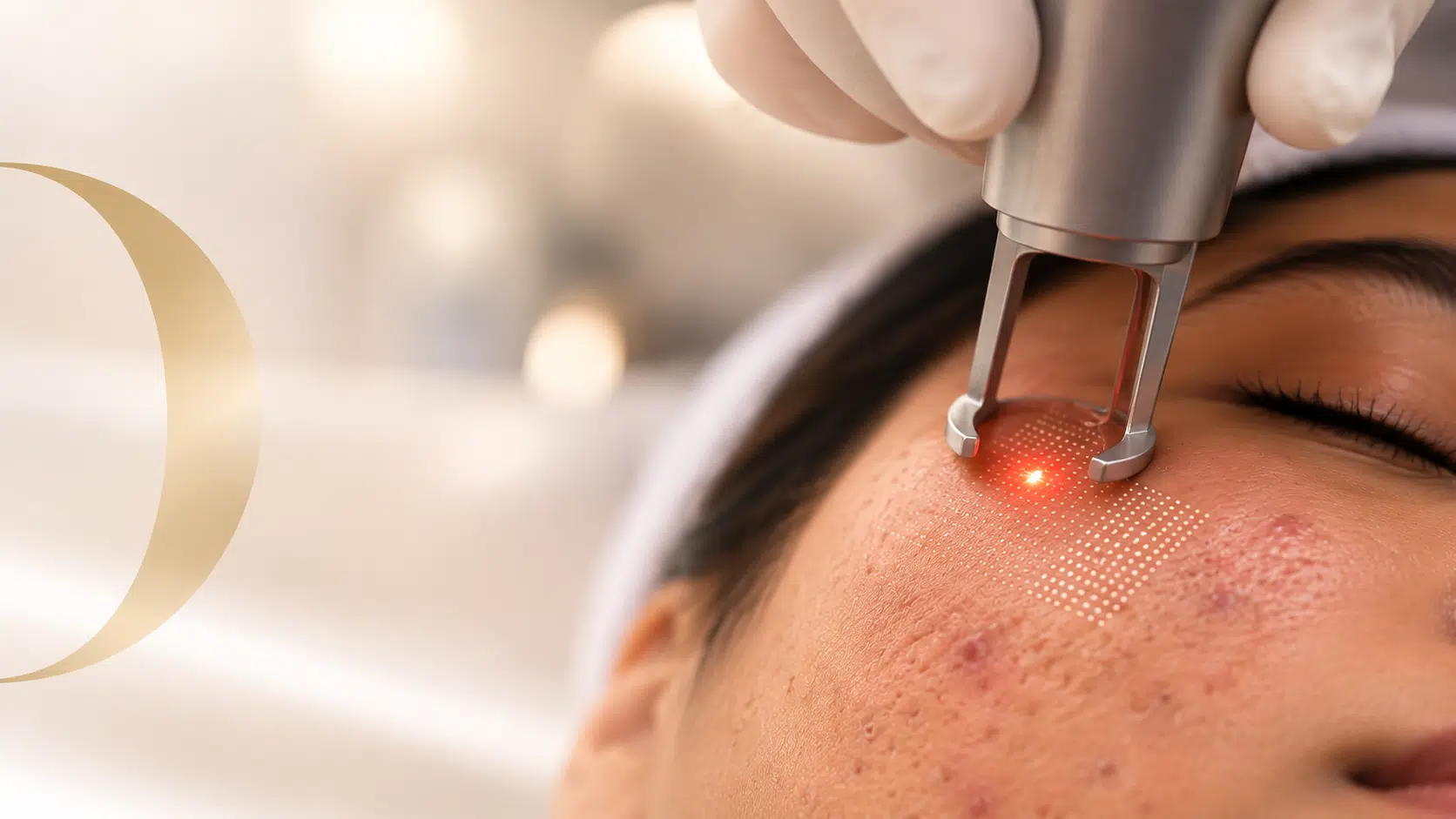
- Fractional Laser
- Subcision
- PRP (Platelet-Rich Plasma)
- Chemical Peels
- Combination procedures
There is no single treatment that is appropriate for every acne mark or acne scar. The most suitable approach depends on your skin condition, the type of concern, and a dermatologist’s assessment.
Can Acne Marks Turn Into Acne Scars?
No. Acne marks and acne scars are different processes. However, the same acne episode can result in both pigmentation and scarring.
For example, after an inflammatory pimple heals, you may have: Brown mark + depressed scar
The brown area represents a colour change, while the depression represents a structural change. Both may need to be addressed differently.
How to Prevent Acne Marks and Scars
The best time to address acne scarring is often before permanent scars develop. Helpful measures include:
- Treat inflammatory acne early
- Avoid squeezing or picking pimples
- Follow an appropriate acne treatment plan
- Use daily broad-spectrum sunscreen
- Avoid repeatedly irritating active acne
- Seek dermatological advice if acne is severe or persistent
Preventing new inflammatory acne can be an important part of preventing additional scars.
When Should You See a Dermatologist?
Consider seeing a dermatologist if:
- Acne keeps returning
- You develop deep or painful pimples
- Marks aren’t fading
- You notice pits or depressions
- Your skin texture has changed
- You’re unsure whether you have marks or scars
- Previous products haven’t helped
A dermatologist can determine whether you’re dealing with pigmentation, redness, scarring, or a combination.
Frequently Asked Questions
- Are acne marks and acne scars the same?
No. Acne marks usually refer to changes in skin colour, while acne scars involve a structural or textural change in the skin. - Are pimple marks permanent?
Many pimple marks gradually fade, but the time varies depending on your skin type, pigmentation, inflammation, and sun exposure. - Are acne scars permanent?
True acne scars are generally persistent because they involve structural changes to the skin. Professional treatments may improve their appearance. - How can I remove pimple marks?
Treatment depends on whether the mark is caused by pigmentation or persistent redness. A dermatologist can identify the type of mark and recommend suitable options. - Can creams remove acne scars?
Skincare can support overall skin health and may help with some pigmentation, but creams generally cannot fully correct deeper structural acne scars. - What is the difference between pimple marks and pimple scars?
“Pimple marks” commonly refers to red or dark spots left after acne, while “pimple scars” generally refers to lasting changes in skin texture such as pits or depressions. - Can acne scars and marks be treated together?
Yes. Some people have both pigmentation and structural scars. A personalised treatment plan may address both concerns, depending on the dermatologist’s assessment. - Which is harder to treat: acne marks or acne scars?
Deep structural acne scars are generally more challenging because they involve changes in the skin’s structure. The appropriate treatment depends on the individual concern.
Understanding the difference between acne marks and acne scars can help you make better decisions about your skin.
If the skin is smooth but discoloured, you may be dealing with an acne mark. If there is a visible depression, pit, raised area, or change in texture, it may be an acne scar. However, the distinction isn’t always obvious.
At ANLON Skin & Aesthetics, Dr. Nisha R Srinivas evaluates your skin carefully to identify the underlying concern before discussing treatment options. The approach is personalised because every person’s skin heals differently.
If you’re unsure whether you’re dealing with pimple marks, acne scars, or both, a dermatologist consultation can help you understand your skin and explore appropriate treatment options.
Explore our Acne Scar Treatment page to learn more.