How to Remove Acne Scars: A Dermatologist’s Guide to Smoother Skin
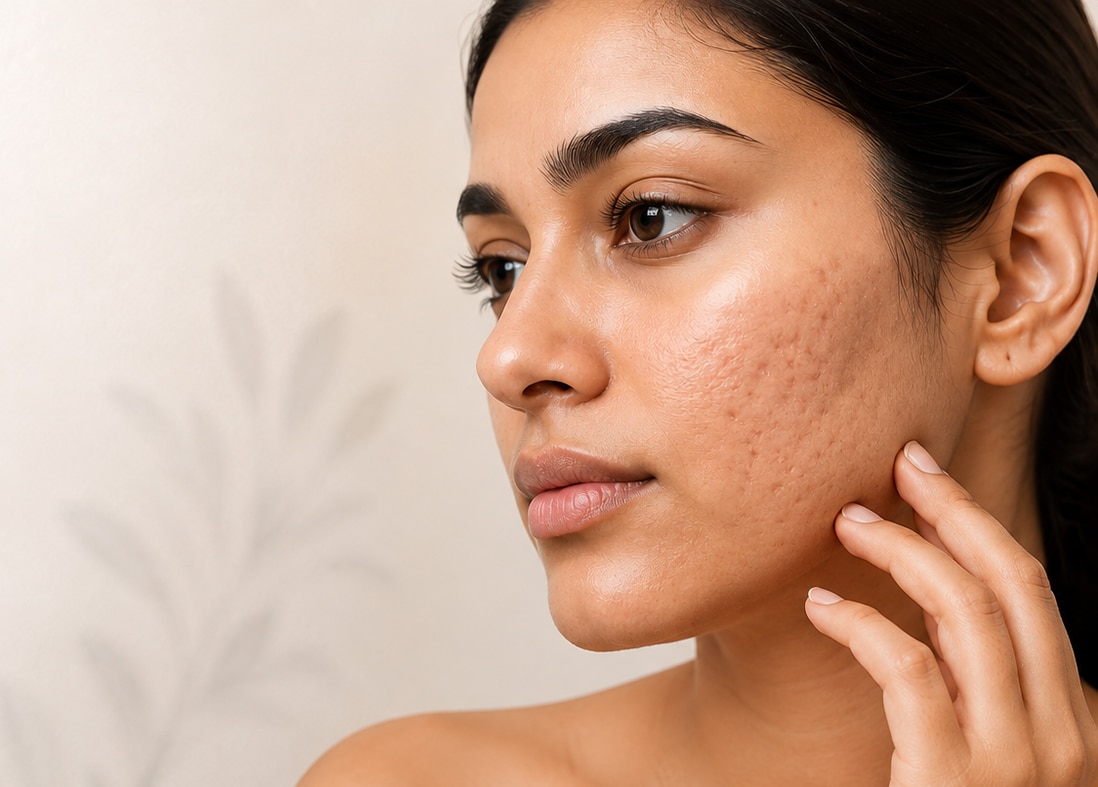
Acne may disappear, but the scars it leaves behind can remain for months or even years. Whether you call them acne scars or pimple scars, these changes in skin texture often affect confidence and make many people wonder if their skin can ever become smooth again.
One of the most common questions dermatologists hear is, “How can I remove acne scars?” The answer depends on the type of scars you have, your skin type, and how your skin heals. While no treatment can erase every scar completely, modern dermatology offers several effective ways to significantly improve the appearance of acne scars and restore smoother-looking skin.
At ANLON Skin & Aesthetics, we believe acne scar treatment should never be a one-size-fits-all approach. Every patient’s skin is unique, which is why treatment begins with a detailed dermatologist consultation to identify your scar type and recommend the most suitable treatment plan.
In this guide, you’ll learn:
- Can acne scars be removed?
- Why acne scars develop
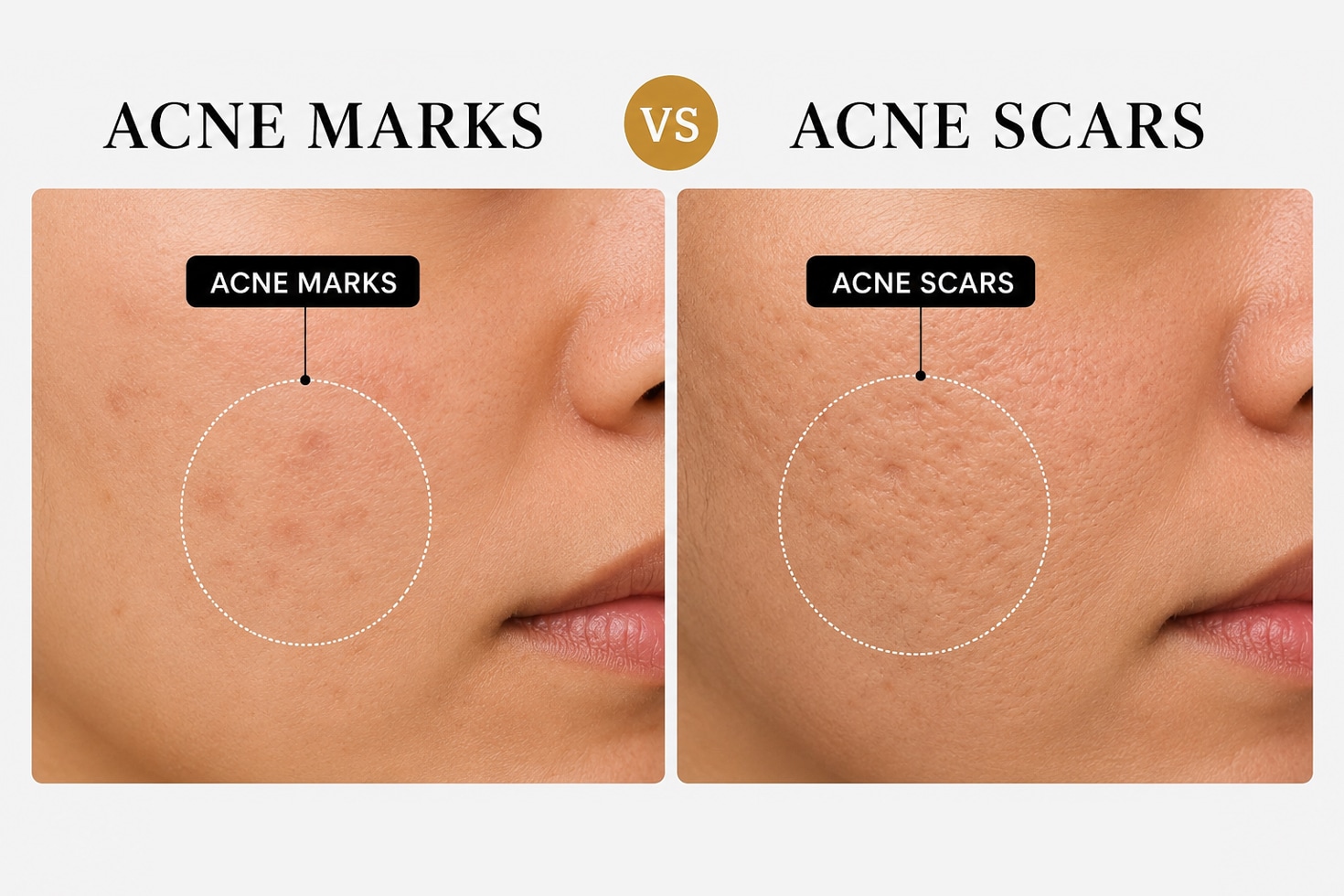
- The difference between acne scars and pimple marks
- The most effective dermatologist-recommended treatments
- What results you can realistically expect
- When it’s time to consult a dermatologist
Can Acne Scars Be Removed?
One of the biggest misconceptions is that acne scars can disappear overnight with creams or home remedies.
The reality is that true acne scars are permanent structural changes within the skin. They form when inflammation damages collagen during the healing process. Because the skin’s structure has changed, acne scars usually require professional treatment to improve their appearance.
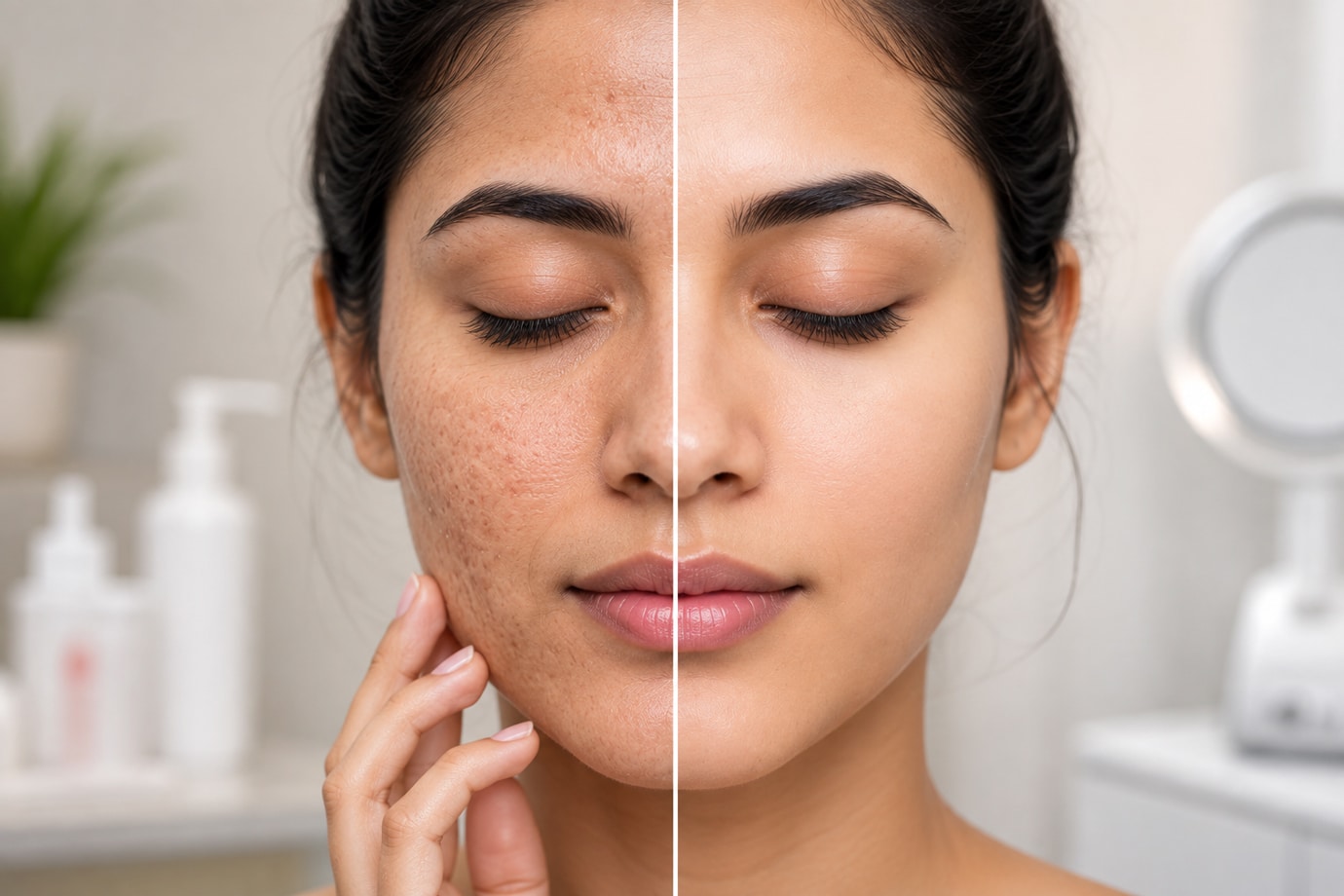
The good news is that modern treatments can significantly improve skin texture, reduce scar depth, and create smoother, healthier-looking skin over time.
The earlier acne scars are assessed by a dermatologist, the more treatment options are available.
Why Do Acne Scars Form?
Acne scars develop when inflamed pimples damage the deeper layers of the skin.
During healing, your body produces collagen to repair the damaged tissue. If too little collagen is produced, the skin sinks inward, creating depressed scars. If excessive collagen forms, raised scars may develop.
Several factors increase the risk of acne scarring, including:
- Severe inflammatory acne
- Delayed treatment of active acne
- Picking or squeezing pimples
- Repeated acne breakouts
- Family history of acne scarring
Preventing acne scars begins with treating active acne early and avoiding habits that increase skin damage.
Acne Scars vs Pimple Marks
Many people confuse acne scars with acne marks, but they are different conditions.
| Condition | Acne Marks | Acne Scars |
|---|---|---|
| Appearance | Flat areas of pigmentation (may appear red, brown, or pink depending on your skin tone). | Depressions, pits, or raised areas rather than colour changes. |
| Skin Structure | The skin’s structure remains normal. | Involves permanent structural changes within the skin. |
| Resolution & Treatment | Often fade gradually with time and may improve with sunscreen, topical skincare, and chemical peels. | Usually require dermatologist-guided procedures that stimulate collagen remodelling and improve skin texture. |
Can Home Remedies Remove Acne Scars?
Many natural remedies claim to remove acne scars, including aloe vera, lemon juice, coconut oil, and vitamin E.
While some ingredients may soothe the skin or improve hydration, there is limited scientific evidence that home remedies can remove true acne scars.
Home care may help reduce post-acne pigmentation, but it cannot rebuild lost collagen or release tethered scars beneath the skin.
If your skin has visible depressions or uneven texture, professional treatments are generally needed to achieve meaningful improvement.
How Dermatologists Remove Acne Scars
Removing acne scars isn’t about finding a single “best” treatment. Instead, dermatologists begin by understanding what type of scars you have, how deep they are, and how your skin heals.
At ANLON Skin & Aesthetics, every treatment plan starts with a detailed skin assessment. During your consultation, the dermatologist evaluates the type of acne or pimple scars, your skin type, previous acne history, and your treatment goals before recommending the most appropriate approach.
Different scar types respond to different treatments. For example, ice pick scars require a different approach from rolling or boxcar scars. Many patients also have a combination of scar types, which means a personalised treatment plan often provides better results than relying on a single procedure.
Rather than focusing on one treatment alone, modern acne scar management aims to improve the skin gradually by stimulating collagen remodelling and restoring a smoother skin texture over time.
How Different Scar Types Are Commonly Treated
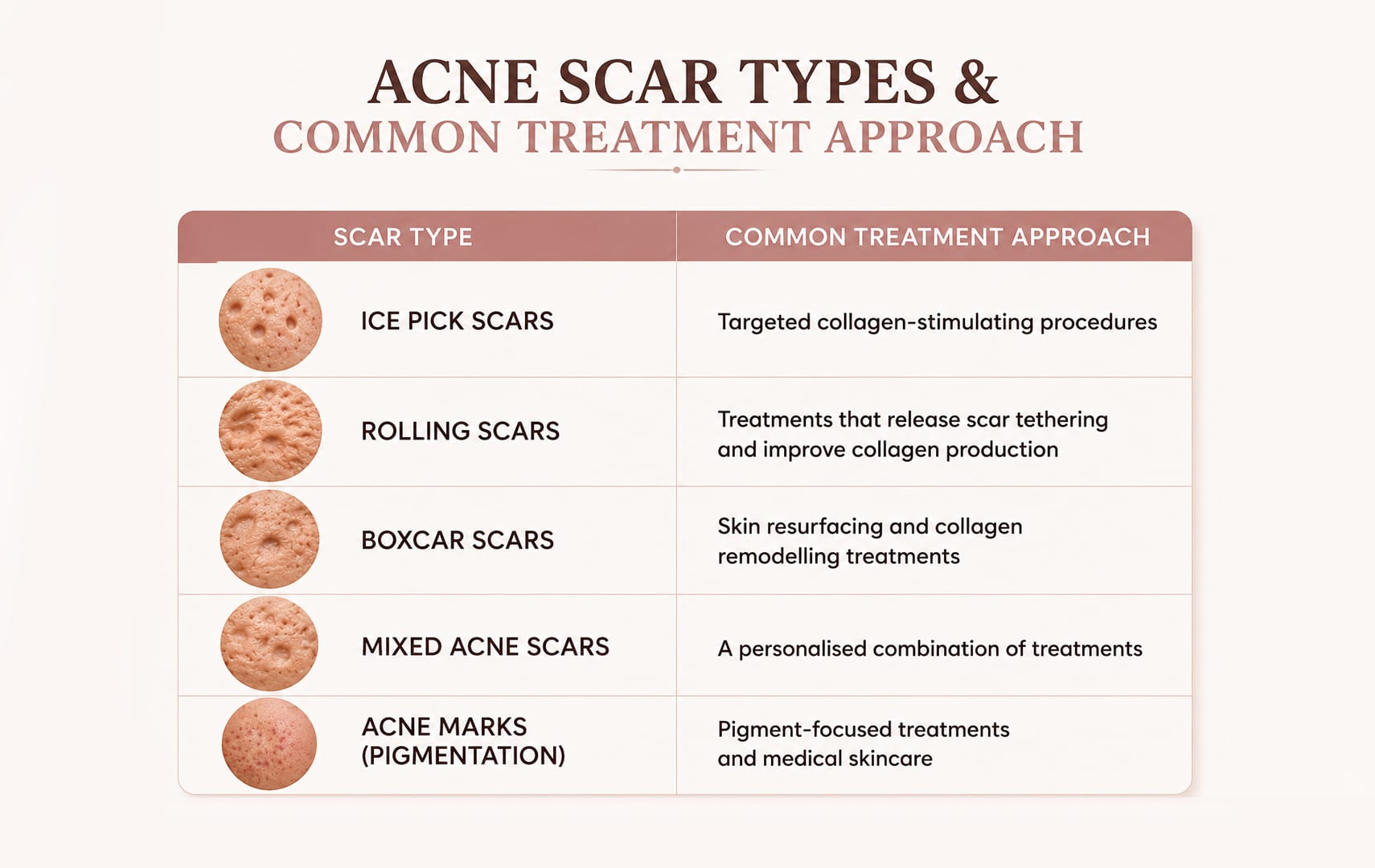
Because every patient’s skin is different, the choice of treatment depends on a comprehensive dermatologist assessment rather than the scar type alone.
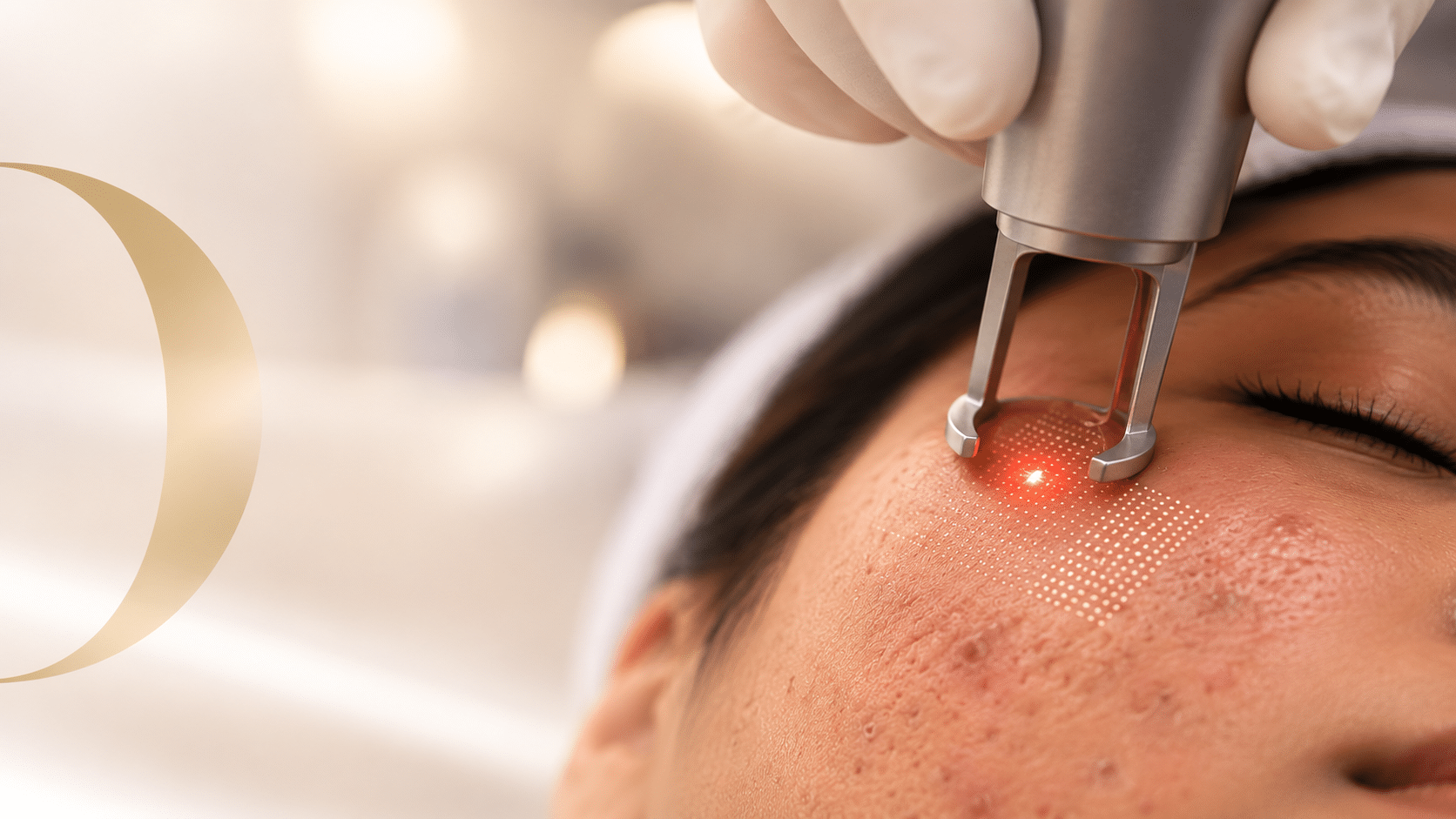
If you’d like to understand how each procedure works including Fractional CO₂ Laser, Microneedling, Subcision, TCA CROSS, Chemical Peels, PRP Therapy, and Dermal Fillers—read our detailed guide on Best Acne Scar Treatments, where we explain when each treatment is recommended and what you can expect during the treatment journey.
Which Treatment Removes Acne Scars Best?
There is no single treatment that works for every patient.
Different scar types respond differently to different procedures.
| Scar Type | Commonly Recommended Treatments |
|---|---|
| Ice Pick Scars | TCA CROSS, Fractional CO₂ Laser |
| Rolling Scars | Subcision, Microneedling |
| Boxcar Scars | Fractional CO₂ Laser, Microneedling |
| Mixed Scars | Combination Therapy |
Many patients have multiple scar types, which is why combination therapy often provides the most comprehensive improvement.
How Long Does Acne Scar Treatment Take?
Acne scar treatment is a gradual process.
Because collagen takes time to remodel, most patients require multiple treatment sessions spaced several weeks apart.
The exact number of sessions depends on:
- Scar type
- Scar severity
- Skin healing response
- Treatment selected
Visible improvements often continue for several months after treatment as the skin naturally produces new collagen.
Can Acne Scars Be Removed Permanently?
Complete removal of every acne scar is not always possible.
However, many patients experience significant improvement in scar depth, skin texture, and overall appearance with a personalised treatment plan.
The goal of treatment is not perfection but healthier, smoother, and more even-looking skin.
When Should You See a Dermatologist?
You should consider a dermatologist consultation if:
- Acne scars affect your confidence
- Home remedies have not improved your skin
- You have deep pits or uneven texture
- Acne continues to leave new scars
- You are unsure which treatment is suitable
Early assessment helps identify the most appropriate treatment before scars become more established.
Why Choose ANLON Skin & Aesthetics?
At ANLON Skin & Aesthetics, every acne scar treatment plan begins with understanding your skin rather than recommending a standard package.
Our dermatologist carefully evaluates:
- Your scar type
- Skin type
- Previous acne history
- Lifestyle
- Treatment goals
Based on this assessment, we develop a personalised treatment plan that may combine procedures such as Fractional CO₂ Laser, Microneedling, Subcision, TCA CROSS, Chemical Peels, or PRP Therapy to improve skin texture gradually and naturally.
Because collagen remodelling is a biological process, treatment is performed over multiple sessions with realistic expectations and ongoing clinical guidance.
Frequently Asked Questions
- Can acne scars disappear naturally?
Superficial acne marks may fade with time, but true acne scars usually require professional treatment. - What is the fastest way to remove acne scars?
There is no instant solution. Treatments such as Fractional CO₂ Laser, Microneedling, and Subcision provide gradual improvement over multiple sessions. - Is laser treatment better than microneedling?
The best treatment depends on your scar type. Many patients benefit from a combination of both procedures. - Can old acne scars be treated?
Yes. Even long-standing acne scars can often be improved with dermatologist-guided treatment. - Is acne scar treatment painful?
Most procedures are performed using topical numbing cream to improve comfort during treatment.
Start Your Acne Scar Treatment Journey
Every acne scar tells a different story, which is why every treatment plan should be personalised.
Whether you’re concerned about pimple scars, deep acne scars, or uneven skin texture, a dermatologist consultation is the first step toward understanding which treatment is most suitable for your skin.
At ANLON Skin & Aesthetics, we combine clinical expertise with personalised care to help you achieve healthier, smoother-looking skin through evidence-based acne scar treatments.
Book your dermatologist consultation today and take the first step towards clearer, more confident skin.